
What Causes Nightmares? Understanding the Causes of Bad Dreams

Nightmares are most often caused by stress, anxiety, trauma, sleep deprivation, certain medications, and lifestyle habits like eating late or drinking alcohol before bed.
Most people have had at least one nightmare that left them shaken at 3 a.m., heart pounding, sheets twisted. But when bad dreams start showing up regularly, it helps to understand what causes nightmares in the first place. Some reasons for having bad dreams are straightforward, like a stressful week at work. Others, like medication side effects or underlying sleep disorders, are less obvious. Keep reading to learn why nightmares happen, when they’re most likely to occur, and how to reduce them.
Key Takeaways
- Stress and anxiety are a couple of the most common causes of nightmares.
- Sleep deprivation increases REM rebound, which makes nightmares more frequent and intense.
- Antidepressants, blood pressure drugs, and alcohol can all disrupt sleep patterns and trigger vivid nightmares.
- Late-night meals, stimulating screen content, and an uncomfortable sleep environment all contribute to nightmare frequency.
- Simple changes to your routine and bedroom setup can reduce nightmares without medical treatment.
What Are Nightmares?
Nightmares are vivid, disturbing dreams that typically involve feelings of fear, anxiety, or distress. They feel real enough to wake you up, and you can usually remember the details afterward. According to the American Academy of Sleep Medicine, nightmares are classified as a parasomnia, which is a category of sleep disorders involving unwanted experiences during sleep.[1]
Everyone has nightmares occasionally, and they’re a normal part of how the brain processes emotions and memories. But frequent nightmares can disrupt sleep quality, lead to excessive daytime sleepiness, and even contribute to somniphobia. Understanding the causes of dreams in general can also shed light on why some take a darker turn.
When Are Nightmares Most Likely to Occur?
Nightmares happen almost exclusively during REM (rapid eye movement) sleep, the stage most closely associated with vivid dreaming. REM cycles get longer as the night goes on, which is why nightmares tend to hit in the second half of the night or early morning hours.
During REM sleep, your brain is highly active. It’s processing emotions, consolidating memories, and running through scenarios. Your body is temporarily paralyzed to stop you from acting out your dreams. When this process gets disrupted, you might experience hypnic jerks as you drift off, or in more intense cases, nocturnal panic attacks that jolt you awake. These disruptions don’t always include nightmares, but they share the same underlying territory — your brain struggling to transition smoothly through sleep stages.
What Causes Nightmares?
There’s rarely a single explanation for what causes nightmares. Most of the time, it’s a combination of mental, physical, and behavioral factors. Here are the most common causes of nightmares:

Stress and anxiety
Stress and anxiety are among the most common triggers for nightmares in adults. When your mind is overwhelmed during the day, it doesn’t just shut off at night. Stress hormones like cortisol interfere with sleep architecture, and unresolved worries tend to replay during REM sleep in exaggerated, often frightening ways.[2]
Sleep disorders
Conditions like sleep apnea, insomnia, and restless leg syndrome fragment your sleep throughout the night.[3] This fragmentation increases the likelihood of waking during or after a REM cycle, which makes you more aware of the dreams you were having. Some people use techniques like lucid dreaming to cope with recurring nightmares, but the underlying sleep disorder still needs to be addressed.
Trauma and emotional experiences
Post-traumatic stress disorder (PTSD) is one of the strongest predictors of recurring nightmares, and up to 80% of PTSD patients experience them.[4] The brain uses dreaming to process difficult experiences, and for people with trauma, that processing often manifests as replaying the event or encountering distorted versions of it.
Even without a PTSD diagnosis, emotionally intense experiences — grief, conflict, major life changes — can trigger a stretch of bad dreams.
Sleep deprivation and irregular sleep
When you don’t get enough sleep, your body compensates with REM rebound — it prioritizes REM sleep the next time you do sleep, leading to longer and more intense dream periods.[5]
The result is more vivid, emotionally charged dreams and more nightmares. Irregular sleep schedules, like those caused by shift work or jet lag, produce a similar effect by throwing off your circadian rhythm.
Certain medications
A number of prescription drugs list nightmares as a side effect. Antidepressants (especially SSRIs), beta-blockers, and drugs used to treat Parkinson’s disease can all affect neurotransmitter activity in ways that intensify dreaming.[6] If you’ve noticed a change in your dreams after starting a new medication, bring it up with your doctor.
Illness or fever
When your body is fighting off an illness, your brain doesn’t sleep as well. Fever dreams are more bizarre and negatively toned than regular dreams, likely because elevated body temperature disrupts normal sleep cycles and increases time in lighter, dream-prone stages.[7]
Late-night eating or alcohol use
Can eating before bed cause nightmares? There’s evidence to suggest it can. Eating a heavy meal close to bedtime increases your metabolism and body temperature, which can stimulate brain activity during sleep. A study found that spicy and dairy-heavy foods were among the most commonly reported triggers for disturbing dreams.[8]
Meanwhile, alcohol suppresses REM sleep early in the night but causes a REM rebound later, often leading to intense dreams in the second half of the night. Learning how alcohol affects sleep can help you make better choices about evening drinking.
Scary or stimulating content before bed
Watching horror movies, reading disturbing news, or scrolling through intense social media before bed gives your brain fresh material to work with during REM sleep. Research from the University of North Carolina shows the brain can’t distinguish between real and perceived threats, so that true crime documentary at 11 p.m. can easily fuel a nightmare at 2 a.m.[9]
How Can You Reduce or Prevent Nightmares?
If you’re wondering how to stop nightmares naturally, most cases respond well to lifestyle and environmental changes. Here are some approaches that help:
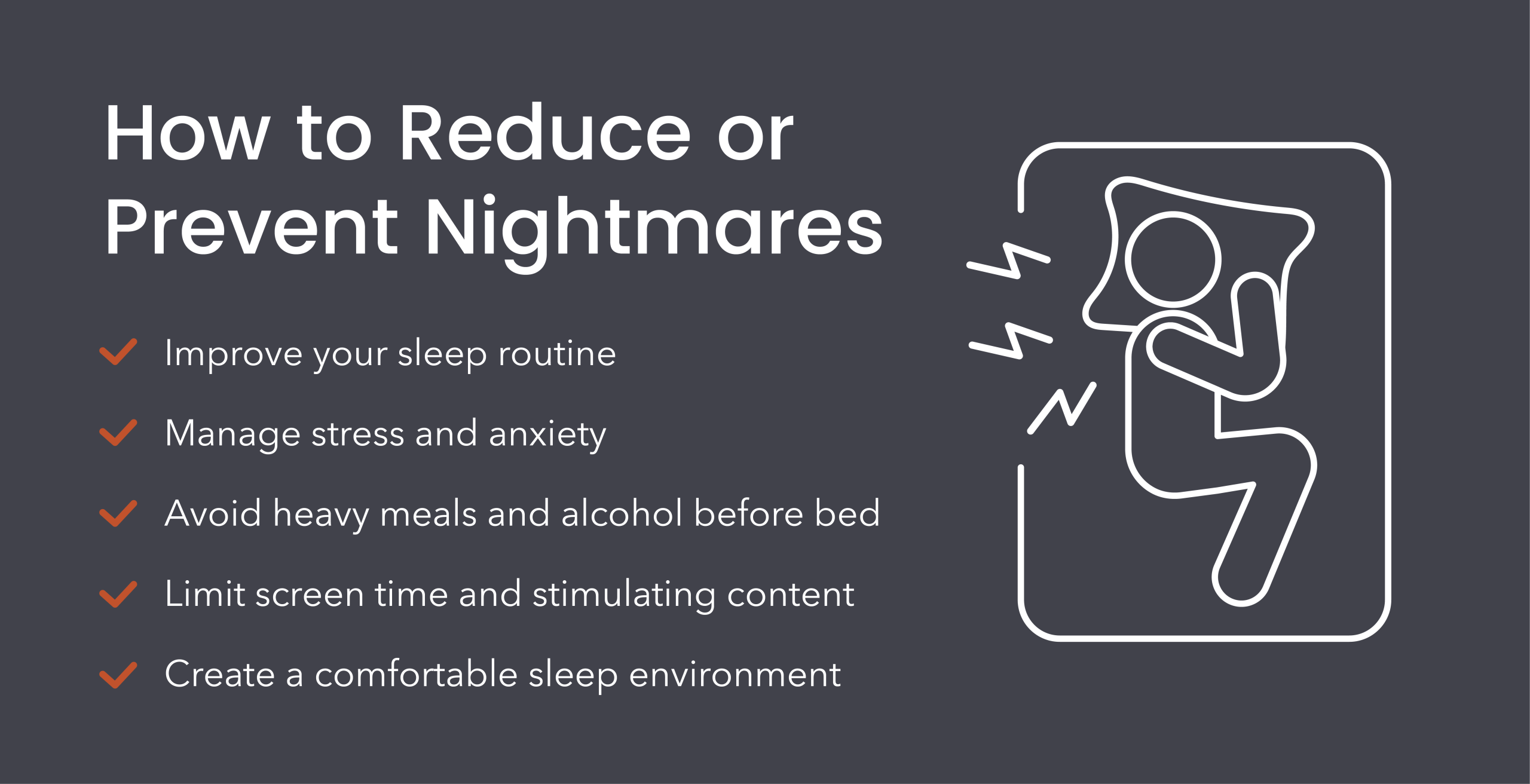
Improve your sleep routine
Going to bed and waking up at the same time every day regulates your circadian rhythm and reduces sleep disruptions that trigger nightmares. A nightly wind-down routine tells your brain that it’s time to shift into sleep mode.
Try relaxing playlists for sleep or light reading as part of your pre-bed ritual, and be mindful of caffeine and sleep. Cutting off caffeine by early afternoon can improve both sleep quality and dream content.
Manage stress and anxiety
Since stress is one of the most common drivers of nightmares, managing it can have a direct impact on your sleep. Journaling before bed can help you offload anxious thoughts so they’re less likely to follow you into dreams. Meditation for sleep is another evidence-backed approach. Even just a few minutes of guided breathing before bed can lower cortisol levels and ease you into a calmer sleep state.
Avoid heavy meals and alcohol before bed
Try to finish eating at least a few hours before sleep, and keep evening meals on the lighter side. If you drink alcohol, try to limit it to earlier in the evening and follow it with water. These adjustments reduce the metabolic and neurochemical disruptions that contribute to vivid, unsettling dreams.
Limit screen time and stimulating content
Give yourself at least 30 minutes of screen-free time before bed, and choose calm or neutral content for evening viewing. Blue light from screens also suppresses melatonin production, which can delay sleep onset and throw off your REM cycles.
Create a comfortable sleep environment
Your bedroom should be cool, dark, and quiet. Investing in the right mattress, such as a supportive hybrid mattress, matters. With the right sleep system, you can reduce the physical discomfort that triggers restless sleep that can lead to nightmares.
FAQs: Causes of Nightmares
When should you talk to a doctor about nightmares?
If nightmares happen multiple times a week, interfere with your daytime functioning, or connect to a traumatic event, consult a healthcare provider. A doctor may recommend cognitive behavioral therapy, image rehearsal therapy, or medication adjustments.
Why are nightmares more common in children?
Children experience more REM sleep than adults, so they spend more time in the stage where nightmares occur. Younger children also have a harder time understanding what’s real and what’s not, which can make nightmares feel especially frightening. Most children outgrow frequent nightmares as their emotional regulation matures.[10]
What is the difference between nightmares and night terrors?
Nightmares occur during REM sleep and are remembered after waking. Night terrors happen during deep non-REM sleep and involve sudden screaming, thrashing, or intense fear. Night terrors are more common in children and tend to resolve on their own.[11]
Do certain foods cause nightmares?
Some research suggests that spicy foods, dairy, and sugar-heavy snacks consumed close to bedtime may increase nightmare frequency. These foods can raise body temperature or cause indigestion, both of which disrupt sleep. The effect varies from person to person, so paying attention to what you eat on nights when bad dreams occur can help you identify personal triggers.
Wrapping Up: Understanding Nightmares and How to Prevent Them
Now that you have a clearer picture of what causes nightmares, you can start making targeted changes to your habits and sleep environment. Managing stress, cleaning up your evening routine, and setting up your bedroom for better rest often have the biggest impact on nightmare frequency.
If your mattress is part of the problem, Layla Sleep can help. Our Hybrid and Memory Foam Mattresses are designed with flippable firmness so you can find the comfort level that works best for your body. Pair one with a Layla weighted blanket for deeper, calmer sleep — and fewer reasons to wake up in the middle of the night.
References
- “Nightmares.” Sleep Education, 15 Sept. 2023, sleepeducation.org/sleep-disorders/nightmares/.
- “7 Reasons You’re Having Nightmares.” Cleveland Clinic, health.clevelandclinic.org/what-causes-nightmares.
- BaHammam, Ahmed S., and Aljohara S. Almeneessier. “Dreams and Nightmares in Patients with Obstructive Sleep Apnea: A Review.” Frontiers, Frontiers, 23 Mar. 2026, www.frontiersin.org/journals/neurology/articles/10.3389/fneur.2019.01127/full.
- Morgenthaler, Timothy I, et al. “Position Paper for the Treatment of Nightmare Disorder in Adults: An American Academy of Sleep Medicine Position Paper.” Journal of Clinical Sleep Medicine : JCSM : Official Publication of the American Academy of Sleep Medicine, U.S. National Library of Medicine, 15 June 2018, pmc.ncbi.nlm.nih.gov/articles/PMC5991964/.
- Suchecki, Deborah, et al. “REM Sleep Rebound as an Adaptive Response to Stressful Situations.” Frontiers in Neurology, U.S. National Library of Medicine, 2 Apr. 2012, pmc.ncbi.nlm.nih.gov/articles/PMC3317042/.
- Loddo, Giuseppe, et al. “The Treatment of Sleep Disorders in Parkinson’s Disease: From Research to Clinical Practice.” Frontiers, Frontiers, 23 Mar. 2026, www.frontiersin.org/journals/neurology/articles/10.3389/fneur.2017.00042/full.
- Schredl, Michael, and Daniel Erlacher. “Fever Dreams: An Online Study.” Frontiers in Psychology, U.S. National Library of Medicine, 28 Jan. 2020, pmc.ncbi.nlm.nih.gov/articles/PMC6997236/.
- Nielsen, Tore, and Russell A Powell. “Dreams of the Rarebit Fiend: Food and Diet as Instigators of Bizarre and Disturbing Dreams.” Frontiers in Psychology, U.S. National Library of Medicine, 17 Feb. 2015, pmc.ncbi.nlm.nih.gov/articles/PMC4330685/.
- How Watching a Scary Movie Can Affect Your Sleep and Dreams—and What to Do about It – College of Arts and Sciences, college.unc.edu/inthemedia/how-watching-a-scary-movie-can-affect-your-sleep-and-dreams-and-what-to-do-about-it/.
- “The Vicious Cycle of Exhaustion and Nightmares.” Cleveland Clinic, health.clevelandclinic.org/nightmares-in-children.
- Swaim, Emily. “What’s the Difference between Nightmares and Night Terrors?” Healthline, Healthline Media, 7 Apr. 2022, www.healthline.com/health/sleep/night-terrors-vs-nightmares.